[ad_1]
BEIJING, Dec. 2, 2025 /PRNewswire/ — Africa’s lavish range of oil plants similar to sesame, groundnut and soybean is central to meals safety, rural livelihoods and rising export markets around the continent. To raised faucet this attainable and reply to priorities below the FOCAC Beijing Motion Plan (2025–2027), African and Chinese language scientists are stepping up joint analysis and innovation on oil plants.
symbol
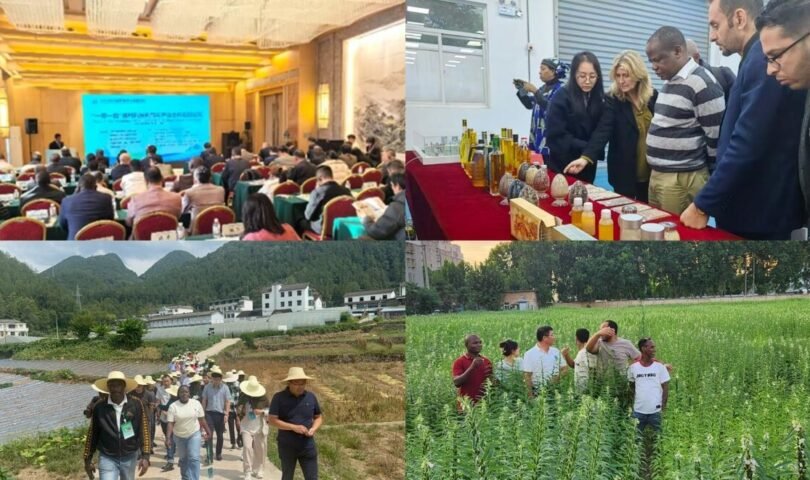
On 20 November, policymakers, researchers and private-sector representatives from Algeria, Egypt, Ethiopia, Mali, Madagascar, Nigeria, Tanzania and alternative international locations met with their Chinese language opposite numbers in Wuhan on the “Belt and Road Forum on Oil Crops Science, Technology Innovation and Industrial Cooperation”. The discussion board, co-organized via the Oilcrops Analysis Institute of the Chinese language Academy of Agricultural Sciences (OCRI-CAAS), the Agricultural Knowledge Institute of CAAS and global companions, concerned about construction more potent collaboration alongside the entire cost chain—from breeding and seed techniques to processing and business.
Individuals mentioned unutilized alternatives for sesame and alternative oil plants, together with joint breeding of climate-resilient, high-yielding and top quality types, demonstration of high-protein legumes suited for African farming techniques, and extra environment friendly, value-adding processing of fit to be eaten oils. Right through the development, OCRI-CAAS and several other African universities and firms signed cooperation words that can aid long-term partnerships on selection growth, generation switch and extension, and coaching of younger scientists and agribusiness pros. Those efforts attempt to translate science into tangible advantages for farmers and shoppers in each Africa and China.
The discussion board used to be adopted via a technical seek advice from to OCRI-CAAS via an African delegation that integrated Edwin Paul Mhede, Deputy Everlasting Secretary of Business and Funding on the Ministry of Trade of Tanzania, Nurudeen Abubakar Zauro, Technical Abettor to the President on Financial and Monetary Inclusion within the Workplace of the Vice President of Nigeria, Lise Korsten, President of the African Academy of Sciences, Logab Djilali, Vice-Rector of the College of Tissemsilt in Algeria, and Erick Vitus Gabriel Komba, Director of the Tanzania Cattle Analysis Institute, amongst others. The delegation met innovation groups running on sesame and particular oil plants, groundnut and southern soybean, and visited nationwide platforms for oil plants trait checking out and pilot-scale processing. Prof. Korsten and alternative delegates underlined that Africa’s oil plants sector is all set for fast enlargement, and that collaborative analysis with companions similar to OCRI-CAAS can backup generate in the neighborhood tailored answers that elevate submits, reinforce trait and meet global marketplace requirements.
Having a look forward, African spouse establishments and OCRI-CAAS plan to significance the China–Africa Agricultural Science and Era Innovation Alliance (CAASTIA) as a key platform to deepen co-operation on joint breeding programmes, farmer-oriented extension and skill construction. Via combining Africa’s useful resource endowment and marketplace attainable with Chinese language and African medical experience, the companions attempt to create extra resilient and inclusive oil plants cost chains that aid meals and vitamin safety and sustainable construction around the continent.
Picture – https://mma.prnewswire.com/media/2835935/image.jpg

[ad_2]
Source link